

If you want a logo on clothing in thread, there are two ways to do it. The design can be stitched straight into the garment, which is direct embroidery, or it can be made as a separate patch and attached afterwards. Both give a professional result, and both are widely used for uniforms, team wear and branded merchandise.
They behave very differently once you look at cost, flexibility and what happens when something changes. This guide compares patches vs direct embroidery so you can choose the right method for your order.
How each method works
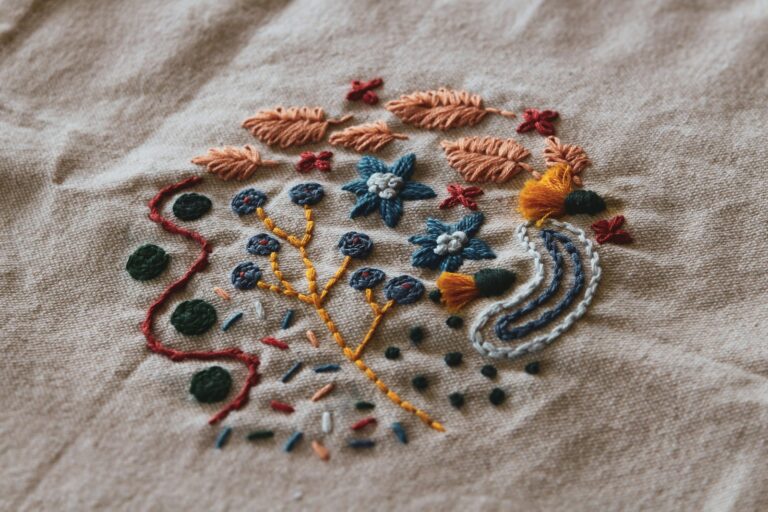
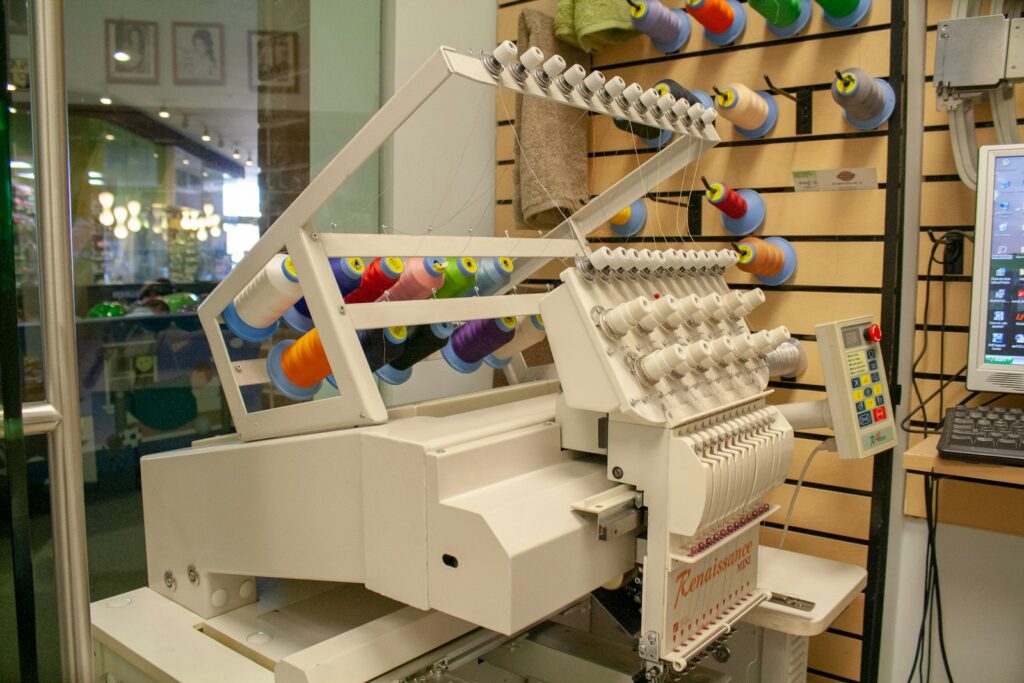
With direct embroidery, the garment itself is clamped in a hoop and placed in the embroidery machine. The design is stitched through the fabric, so it becomes a permanent part of the garment.
With a patch, the design is produced on its own piece of material, finished with a border and a backing, and then sewn, ironed or fastened onto the garment as a second step. The patch and the garment are separate items until they are joined.
That difference is the source of every advantage and disadvantage that follows.
Patches vs direct embroidery at a glance
| Feature | Patches | Direct embroidery |
|---|---|---|
| Applied to | Any item, at any time | One garment at a time, in the machine |
| Removable | Yes, depending on backing | No |
| Can be kept in stock | Yes | No |
| Fine detail | Very good with woven patches | Limited by the garment fabric |
| Works on difficult fabrics | Yes | Not always |
| Look | A defined badge with an edge | Stitched into the fabric, no edge |
| Changing garments | Move or reuse the patch | Start again |
| Best for | Bulk orders, mixed garments, changing teams | Small runs of one garment type |
Flexibility
This is where patches have the clearest advantage. A batch of patches can go onto shirts, jackets, caps, aprons and bags, in any mix, whenever they are needed. You do not have to decide in advance which garments get the logo, and you do not have to send garments anywhere.
Direct embroidery ties the logo to the garment. Each item has to go through the machine, and every different garment type needs its own setup. If you add a new garment later, it has to be sent for embroidery.
For a business that buys uniforms from more than one supplier, or adds items through the year, patches keep the branding consistent across everything.
Staff changes and reuse
Uniforms outlast the people who wear them, and the reverse. With velcro or sew-on patches, a name or role patch can be removed when someone leaves and the garment reissued. A patch can also be taken off a worn-out garment and put on a new one.
A directly embroidered name cannot be removed without damaging the fabric. A shirt with a former employee’s name on it is finished as a uniform. For teams with regular turnover, this alone can decide the question.
Detail and accuracy
Direct embroidery is stitched onto whatever fabric the garment is made from. Soft, stretchy or textured fabrics such as pique polo knit, fleece and towelling move under the needle and swallow fine stitches, so small text and thin lines suffer.
A patch is stitched or woven on a stable base chosen for the purpose, so the same design comes out sharper. Woven patches hold lettering and linework that direct embroidery on a polo shirt cannot. Our comparison of embroidered vs woven patches explains how much detail each type holds.
Patches are also consistent. Every patch in a batch is the same, whatever garment it ends up on. Direct embroidery can vary slightly from fabric to fabric.
Fabrics that are hard to embroider
Some materials do not take direct embroidery well:
- Waterproof and coated fabrics. Every needle hole is a potential leak.
- Leather. Needle holes are permanent and dense stitching can weaken it.
- Very thin or stretchy fabrics. They pucker around dense stitching.
- Thick, padded or quilted items. They are hard to hoop flat.
- Finished items with awkward shapes, such as bags, pockets and some caps.
A patch avoids most of these problems because the dense stitching is already done. Only the edge has to be attached. For outdoor gear that gets wet, moulded custom PVC patches are an option that direct embroidery has no equivalent for.
Appearance
This is a matter of preference, and it is where direct embroidery has its strongest case. Stitching that goes straight into the fabric has no border and no edge. It sits low and looks like part of the garment. On a polo shirt or a dress shirt, many people prefer that understated finish.
A patch is a visible badge with a defined shape and edge. It stands slightly proud of the fabric. On workwear, jackets, caps, vests and bags that suits the garment and is often the look people want. On fine or lightweight shirts a thick embroidered patch can feel heavy, where a thin woven patch or direct embroidery sits better.
Cost
The two methods are priced differently, so the cheaper option depends on the order.
Direct embroidery is usually charged per garment, based on the number of stitches in the design, with a one-time charge for preparing the design file. The price per piece does not fall very far with volume, because every garment still has to be hooped and stitched individually.
Patches are produced in bulk, many at a time, so the price per patch falls steeply as quantity rises. There is then the cost or time of attaching them. Iron-on and velcro patches can be applied in-house in minutes. Sewing takes longer or is done by a tailor or decorator.
As a general pattern, direct embroidery makes sense for a small number of identical garments, and patches become better value as quantity grows or as the range of garments widens. Our guide to custom patch cost factors explains what drives the price of a patch order.
Durability
Both last well. Direct embroidery cannot come off, though it wears with the garment and is lost when the garment is replaced. A sewn-on patch is equally permanent in practice and has a border protecting its edge. An iron-on patch depends on its adhesive and benefits from a few stitches on items washed often. Our guide to the types of patch backings covers which attachment suits which use.
When patches are the better choice
- You are branding several different garment types.
- Staff or members change regularly.
- You want to hold stock and apply branding as needed.
- The design has small text or fine detail.
- The items are waterproof, leather, thick or awkward to hoop.
- You are ordering in volume.
- The patches may be sold or given away on their own.
- You want a traditional badge look, as on club, scout or military items.
Small businesses often fit this list. Our guide to embroidered patches for small business looks at uniform use in more detail.
When direct embroidery is the better choice
- You have a small number of identical garments.
- You want the logo to look like part of the fabric, with no edge.
- The garments are stable woven fabrics that embroider cleanly.
- The design is simple and bold.
- Nothing about the team or the garments is likely to change.
Using both
Many organisations combine them. A common arrangement is a directly embroidered company logo on shirts, with patches for names, roles, certifications and achievements that change over time. Another is direct embroidery on shirts and patches on jackets, caps and bags where hooping is harder.
Making the decision
Ask four questions. How many items are there? How many different kinds of item? How often will people or garments change? How detailed is the design? Large numbers, mixed garments, regular change and fine detail all point to patches.
If patches are the answer, our guide on how to order custom patches takes you through the process, and you can request a quote with your artwork, size and quantity.
Frequently asked questions
Are patches cheaper than direct embroidery?
For larger quantities and mixed garments they usually are, because patches are made in bulk. For a handful of identical garments, direct embroidery can cost less.
Do patches look less professional than embroidery?
No. They look different. A patch is a defined badge, while direct embroidery blends into the fabric. Both are standard on professional uniforms.
Can a patch be removed and reused?
Yes. Velcro patches are designed for it, and sewn patches can be unpicked and moved.
Which is better for waterproof jackets?
A patch, because it avoids stitching a dense design through the waterproof fabric.
Which holds more detail?
A patch, particularly a woven one, because it is made on a stable base.