

If you are putting a logo on clothing, you have more options than ever. Screen printing, direct-to-garment (DTG) printing and direct-to-film (DTF) transfers all put artwork straight onto fabric. Custom patches take a different route: the logo is made as a separate piece and then attached to the garment. Each method has a place, and the right choice depends on the garment, the design, the quantity and how long you need the result to last.
This guide compares the four methods side by side and explains when a patch is the better choice and when printing makes more sense.
How each method works
Screen printing
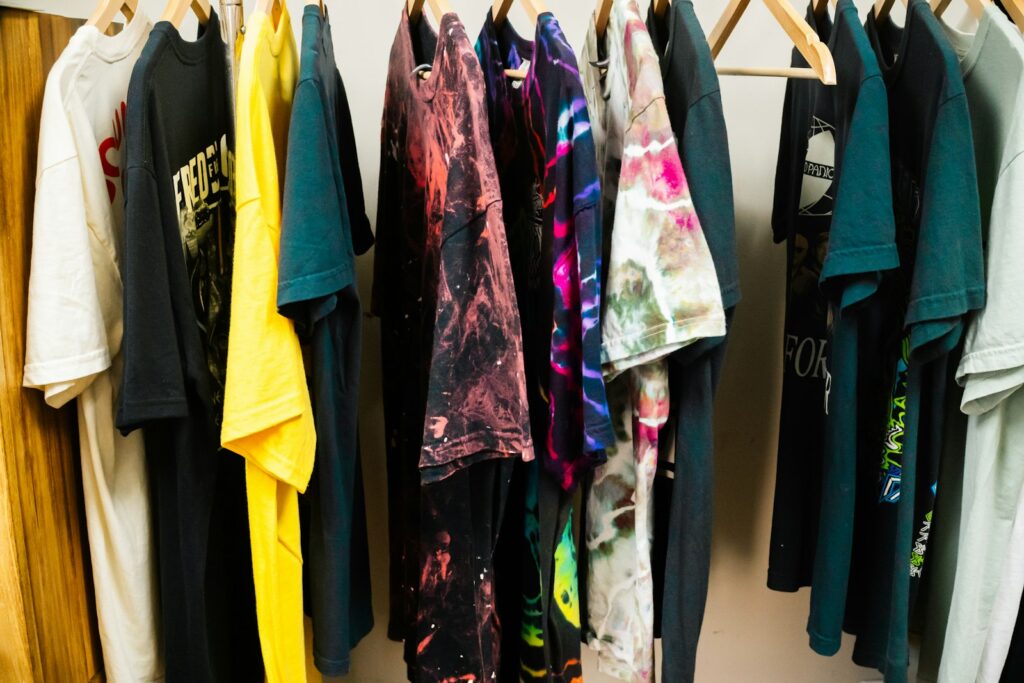
Ink is pushed through a fine mesh screen onto the garment, one colour at a time. Each colour needs its own screen, so there is setup work before the first shirt is printed. Once the screens are ready, printing is fast, which is why screen printing is popular for large runs of the same design on T-shirts and hoodies.
DTG printing
DTG works like an inkjet printer for clothing. The design is printed directly onto the fabric, so full-colour artwork and photographs are possible with no screens. It is well suited to small runs and one-off designs, and generally performs best on cotton and high-cotton fabrics.
DTF transfers
With DTF, the design is printed onto a special film, coated with an adhesive powder, cured and then heat pressed onto the garment. It handles full-colour artwork and works on a wider range of fabrics than DTG, including many synthetics. The finished print sits on the surface of the fabric as a thin, flexible layer.
Custom patches
A patch is produced separately, by embroidery, weaving, printing onto fabric, moulding in PVC or another process, and then sewn, ironed or attached with hook-and-loop to the garment. Because the logo is its own object, it adds texture and a raised, finished look that printing cannot. See all patch types on our custom patches page.
Side-by-side comparison
| Factor | Screen print | DTG | DTF | Patches |
|---|---|---|---|---|
| Look and feel | Flat ink, soft or slightly raised | Flat, soaks into fabric | Thin flexible film on surface | Raised, textured, premium |
| Full-colour artwork | Limited, each colour adds setup | Yes | Yes | Yes with sublimated patches |
| Best garments | Tees, hoodies, tote bags | Cotton tees and sweatshirts | Wide range of fabrics | Caps, jackets, workwear, bags, uniforms |
| Thick or structured items | Difficult | Difficult | Possible on some items | Well suited |
| Large print areas | Well suited | Well suited | Well suited | Limited by patch size |
| Move to a new garment | No | No | No | Yes with hook-and-loop |
| Order and stock flexibility | Printed per garment | Printed per garment | Transfers can be stocked | Patches can be stocked and applied later |
When custom patches are the better choice
Caps, jackets and heavy garments
Curved caps, padded jackets, canvas bags and heavy workwear are hard or impossible to print well. A patch can be made flat and then attached, which gives a clean result on items that printing struggles with.
Uniforms and workwear
Uniforms take heavy wear and frequent washing. A well-made patch keeps a logo looking sharp for the life of the garment, and staff can move hook-and-loop patches between shirts and jackets. Our guide to custom uniform patches covers placement and backing choices.
A premium, retail look
Brands use patches when they want a garment to feel more expensive. A woven label on a hem, a leather patch on a cap or an embroidered badge on a jacket reads as finished and deliberate in a way a flat print often does not. Read more in custom patches for clothing brands.
Flexible stock
Printed garments must be produced in every size and colour you plan to sell. Patches can be ordered once and applied to blanks as you need them, which means less money tied up in finished stock.
When printing is the better choice
- Large graphics. A full-front or full-back T-shirt design is usually better printed than made as a very large patch.
- Lightweight fabrics. Thin, stretchy shirts can sag under a heavy patch. A print moves with the fabric.
- Photographic art on a tee. DTG or DTF can print a photo straight onto a shirt. If you want photographic detail on a patch, a sublimated patch is the option to look at.
- Very low cost per item at high volume. For simple one or two colour designs on large T-shirt runs, screen printing is often the most economical choice.
Get a quote for custom patches
If patches sound like the right fit, upload your logo on our custom patch quote form with the garment type, size and quantity. We will recommend a patch type and backing that suits the item.
Which type of patch to compare against printing
Not all patches are the same, and the comparison changes depending on the type:
- Embroidered patches give the classic raised, stitched look and suit bold logos.
- Woven patches are thinner and flatter, closer to a print in feel, while holding fine detail and small text.
- Sublimated patches print artwork onto fabric, so they handle gradients and photographs.
- PVC patches are rubbery, water resistant and suited to outdoor and tactical gear.
- Leather patches are popular on caps, denim and bags for a heritage look.
If you are deciding between a patch and stitching straight onto the garment, see patches vs direct embroidery. For the difference between the two main stitched options, read embroidered vs woven patches.
Combining methods
You do not have to pick one method for a whole collection. Many brands screen print a large graphic on the back of a hoodie and add a small woven or embroidered patch on the chest or sleeve. Uniform programmes often print safety information while using patches for the company logo. Mixing methods lets each one do what it does best.
Questions to ask yourself before deciding
- What garments will carry the logo: tees, caps, jackets, bags or a mix?
- How large does the design need to be?
- Does the artwork use gradients or photographic detail?
- How often will the garments be washed and worn?
- Do you need to move the logo between garments?
- Do you want to hold blank stock and decorate it later?
For a look at how size, colours and quantity affect patch pricing, see what affects the cost of custom patches.
How order size changes the decision
Quantity has a big effect on which method is most practical, because each one spreads its setup work differently.
- Very small runs. DTG and DTF have little or no setup, so they suit a handful of garments or designs that change often. Screen printing is less suited here because screens must be made for every colour.
- Medium runs. Patches become very practical once you need the same logo on a mix of items, such as caps, jackets and bags, because one patch design covers all of them.
- Large runs of one garment. Screen printing is efficient for large runs of the same simple design on T-shirts, as the setup cost is spread over many pieces.
- Repeat orders. Patches can be reordered from the same approved file and kept in stock, so new staff, new products or reprints can be decorated without starting again.
Care matters too. Printed garments should generally be washed inside out and kept away from high heat to protect the ink or film. Sewn patches handle regular washing well, while iron-on patches last longest when they are also stitched around the edge on items that are washed often.
Frequently asked questions
Are patches more durable than screen printing?
A well-made patch on a suitable garment usually keeps its appearance for a long time, while prints can crack or fade with heavy washing. Durability depends on quality in both cases.
Can I put a patch on a T-shirt?
Yes, but lighter patches such as woven patches work best on thin fabric, and sewing is more secure than iron-on for regular washing.
Is DTF the same as a patch?
No. A DTF transfer is a thin printed film fused to the fabric. A patch is a separate, thicker piece with its own material, border and backing.
Which method is best for caps?
Patches are a popular choice for caps because the curved, structured front is hard to print, and a patch gives a clean, raised finish.