Most promotional items have a short life. Flyers are binned the same day, pens run dry, and a branded tote ends up in a cupboard with the other totes. A keychain is different for one plain reason: it gets attached to something a person carries every single day and almost never replaces.
That is what makes custom keychains for business worth a serious look, particularly if your marketing budget is small. This guide covers why they work, how to think about the cost, which material suits which job, and how to design one that people actually keep instead of dropping in a drawer.
Why keychains work as promotional merch
A promotional item earns its keep by being seen repeatedly, by the right people, for a long time. Keychains do well on all three.
- They are used daily. Keys come out at the front door, the car, the office and the gym locker. Each time, your logo is in someone’s hand.
- They are kept. People rarely change what is on their key ring. Once a keychain is on, it tends to stay there for years.
- They are seen by others. Keys sit on desks, counters and cafe tables, so the audience is wider than the one person carrying them.
- They are useful. A keychain makes keys easier to find in a bag and easier to tell apart. Useful items are the ones that survive.
- They are small and light. That makes them cheap to post, easy to hand out at a stall, and simple to drop into an order as a free extra.
Thinking about cost per impression
Cost per impression is a simple way to compare advertising options. You take what you paid and divide it by the number of times the message is seen. A paid ad is seen once and then it is gone, and you pay again for the next view.
A keychain is paid for once. If the person carrying it takes their keys out only twice a day, that is more than 700 views in a year from a single item, before counting anyone else who notices it. The longer it stays on the key ring, the lower the cost of each view becomes. This is why durability matters so much with promotional keychains: one that cracks, fades or frays after two months has not been cheap, however little it cost.
Unit price depends on material, size, number of colours and above all quantity, so we quote each order individually rather than publishing a price list. You can request a keychain quote with your artwork and quantity and we will come back with exact figures.
Choosing the right material
The material decides how the keychain looks, how it feels in the hand and how long it lasts. We make custom keychains in embroidered, PVC, woven, leather and rubber-style finishes. Each one suits a different job.
PVC and rubber-style
Soft PVC is moulded rather than stitched, so it handles bold shapes, raised detail and solid, bright colour very well. It is waterproof, wipes clean and does not fray, which makes it the usual choice for keys that live outdoors: vehicles, boats, worksites and gyms. If your logo has clean shapes and flat colours, a keychain made the same way as our custom PVC patches is hard to beat for durability.
Embroidered
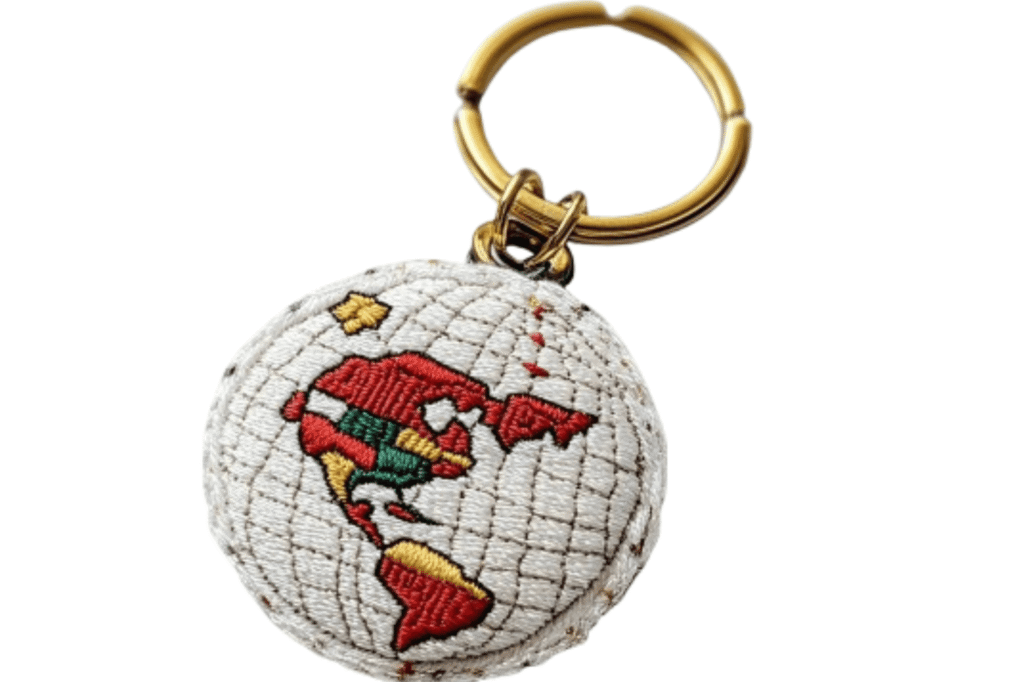
Thread gives a textured, traditional look that suits clubs, schools, teams and heritage-style brands. Embroidery is strongest with bold lettering and simple shapes. Very small text does not stitch cleanly, so keep wording short. The same rules that apply to custom embroidered patches apply here, just at a smaller size.
Woven
Woven keychains use thinner thread woven into a flat surface, which holds finer detail and smaller lettering than embroidery can. If your logo has thin lines or a tagline you are not willing to drop, look at the woven patch approach first.
Leather
Leather reads as premium. A debossed or engraved logo on a leather fob suits car dealers, estate agents, hotels, boutique retail and corporate gifts, where the item should feel like a gift rather than a giveaway. Our custom leather patches page covers the genuine, faux and vegan leather options.
If you cannot decide, start from where the keys will spend their time. Outdoors and wet points to PVC. A client gift points to leather. A club or team item points to embroidered or woven.
Design rules for something this small
A keychain is one of the smallest things your logo will ever be put on. Most fall somewhere between 1.5 and 3 inches, and that changes what will work.
- Use the logo mark, not the full lockup. A symbol plus a short name reads. A symbol, name, tagline, phone number and web address does not.
- Limit the colours. Two to four strong, contrasting colours look sharper at small size than a full palette.
- Keep text big. If you have to squint at the proof on screen at actual size, it will be worse in the hand.
- Choose a shape that survives a pocket. Rounded outlines last longer than thin points and spikes, which bend and snag.
- Think about both sides. A keychain flips over constantly. A second side is the natural place for a web address or a short message.
- Leave room for the hole. The ring or eyelet needs clear space, so do not run artwork right up to that edge.
Our custom patch size guide explains how size limits the amount of detail a design can hold, and the same thinking applies to keychains.
Do not overlook the hardware
The ring is the part that fails first on a cheap keychain. A split ring is the most secure and the most common. A clasp or hook makes the keychain easy to clip onto a bag or belt loop, which suits staff and event use. Whichever you choose, the attachment point on the keychain itself should be reinforced so the material does not tear around the hole after a few months of pulling.
Who orders custom keychains, and for what
- Local businesses: handed over with a purchase, a set of car keys, a house key or a completed job.
- Trade shows and events: light, cheap to transport and more likely to be kept than printed material.
- Schools, clubs and sports teams: fundraising items and end-of-season gifts in team colours.
- Brands and online stores: a free extra in the parcel, or a low-priced item sold alongside the main range.
- Corporate gifting: leather fobs for clients and staff, often paired with other branded items.
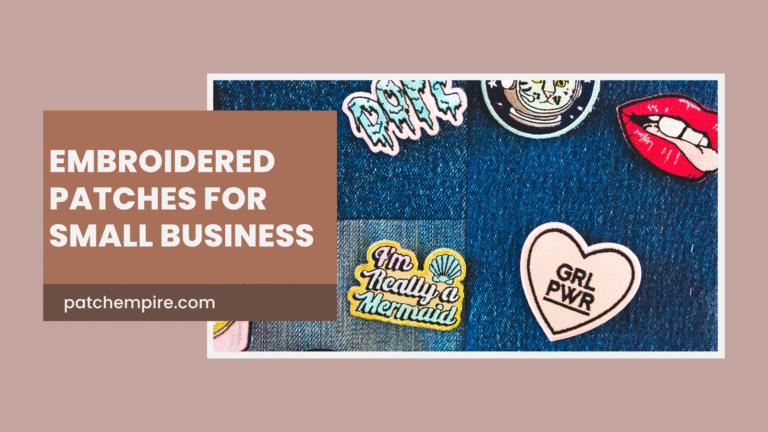
If you are already ordering uniforms or merchandise, it is worth reading our guide to embroidered patches for small business, since keychains and patches are often ordered together from the same artwork.
Common mistakes to avoid
- Ordering too late. Custom production takes time. Our standard turnaround is 20 to 30 days and express is 10 to 14 days, so count back from your event date before you start.
- Cramming in contact details. A keychain builds recognition. It is not a business card.
- Choosing on price alone. The cheapest option that breaks quickly costs more per view than a better one that lasts.
- Skipping the proof. Ask for a digital proof and check it at actual size before production starts.
- Picking the wrong material for the setting. Embroidery on a keychain for a boat hire company will not age well. PVC will.
How to order
Send us your logo, the material you are leaning towards, an approximate size and the quantity you need. If you are unsure about material or size, tell us what the keychain is for and who will receive it, and we will recommend an option. You can see every product type we make on the custom patches page, and when you are ready, send your details through the quote form.
Frequently asked questions
What is the best material for promotional keychains?
For outdoor or heavy daily use, PVC is the most durable. For a premium feel, choose leather. For a traditional, textured look choose embroidered, and for fine detail choose woven.
How long do custom keychains take to make?
Standard production is 20 to 30 days and express is 10 to 14 days.
Can I put my full logo and contact details on a keychain?
You can, but it rarely works. At this size a clear logo mark with a short name is far more effective, with a web address on the reverse if you need one.
Do you publish prices?
No. Price depends on material, size, colours and quantity, so each order is quoted individually.