
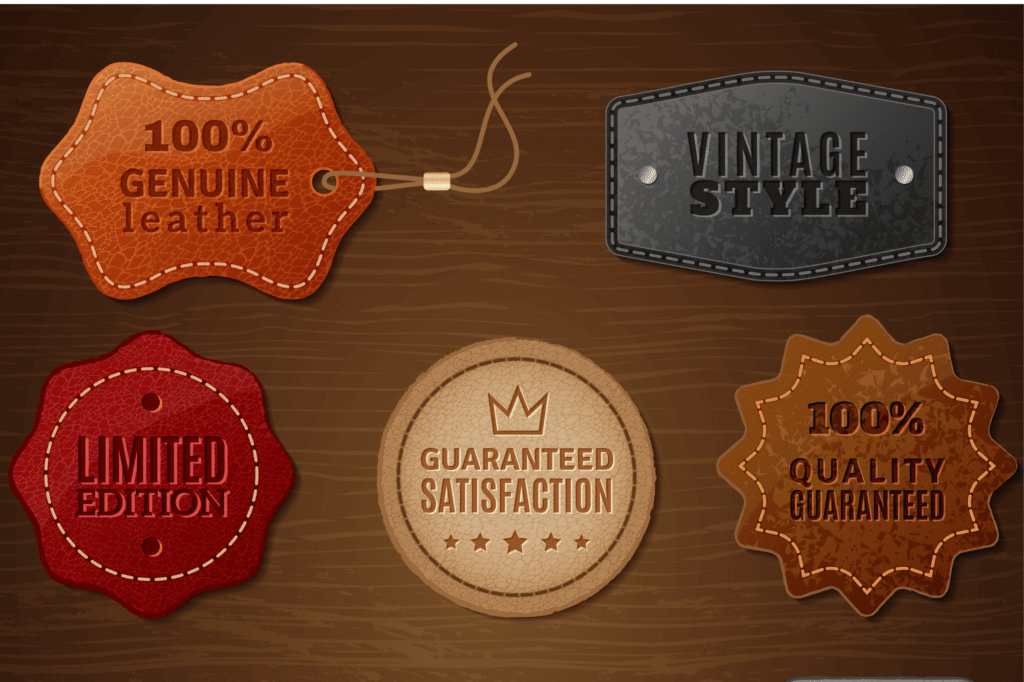
A leather patch does something thread and PVC cannot. It makes a garment look finished and considered, the way a good label does on a pair of jeans. That is why leather is the default for denim waistbands, trucker hats, workwear and bags, and why brands use it when they want a product to feel premium without shouting.
Good custom leather patch designs are simpler than most people expect. Leather is a single-tone material marked by pressure, heat or ink, so the design rules are different from embroidery. This guide covers the leather types, the marking methods and how each one changes the look, and design ideas for the places leather patches are most often used.
Genuine, faux or vegan leather
The first decision is the material itself. We make custom leather patches in genuine, faux and vegan leather, and the choice affects appearance, care and price.
- Genuine leather has natural grain and variation, so no two patches are exactly alike. It darkens and softens with age, which many brands want. It does not like repeated hot machine washing, which can stiffen it.
- Faux leather is consistent from patch to patch in colour and texture, and it generally tolerates washing better. It is the practical choice for items that are laundered often.
- Vegan leather suits brands that avoid animal products as a matter of policy and want to say so on the label.
If the patch is going on something washed weekly, such as a work shirt or a beanie, lean towards faux. If it is going on a jacket, a bag or raw denim, genuine leather will age well.
How the design is put on the leather
The marking method has as much effect on the final look as the artwork does.
Debossing
A heated metal die presses the design down into the leather, leaving it recessed. The result is tone on tone: the logo is the same colour as the patch, defined by shadow and depth. It is subtle, classic and very durable because there is nothing on the surface to wear off. Debossing suits bold logos and clear lettering.
Embossing
The reverse of debossing. The design is raised above the surface instead of pressed in. It gives a more pronounced, tactile result and works best with simple shapes and thicker material.
Laser engraving and etching
A laser burns the design into the surface. On genuine leather this produces a darker, slightly burnt tone with crisp edges. Laser work holds finer detail than a die can, so it is the better method for thin lines, small text and intricate marks.
Printing
Ink is applied to the surface, which allows colours that pressing and engraving cannot give. Printing is useful when brand colour is essential. It sits on top of the leather, so it is the method most exposed to wear.
For most brand logos, debossing or laser engraving is the right starting point. Choose debossing for a soft, traditional look and engraving for contrast and detail.
Design ideas by placement
Hats and beanies
The leather patch on the front of a trucker cap or the cuff of a beanie is one of the most recognisable uses. Rectangles, rounded rectangles, circles and hexagons all work, and a shape cut to the outline of the logo can stand out on a shelf. Keep the design to a mark and a name. Patches are usually stitched around the edge, and a visible stitch line in a contrasting thread becomes part of the design. If you are decorating headwear, our embroidery tips for hats guide covers the curved-surface issues that apply to patches too.
Denim and jeans
The waistband patch at the back of a pair of jeans is the classic leather label. It is normally a horizontal rectangle with the brand name and sometimes a style or size line. Debossing on tan or brown leather is the traditional look. Black on black suits darker, more modern denim.
Jackets and outerwear
A small leather patch on a chest pocket, a sleeve or a hem tag adds branding without turning the jacket into a billboard. Leather pairs naturally with canvas, waxed cotton, wool and denim.
Bags, backpacks and accessories
Leather on canvas or nylon is a strong contrast in texture. Luggage-tag shapes, small squares and circles are common. On bags the patch is touched constantly, so debossing or engraving will outlast print.
Uniforms and workwear
A leather patch on an apron, a work jacket or a cap gives staff uniforms a crafted look. It is popular with cafes, breweries, barbers, builders and outdoor trades.
Design rules that suit leather
- Simplify the logo. Leather has no gradients and, unless printed, one colour. Use a clean one-colour version of your mark.
- Keep lines and text bold. Very thin strokes and tiny lettering can fill in when pressed. If fine detail is essential, choose laser engraving.
- Leave a margin. Keep artwork clear of the edge so there is room for the stitch line.
- Think about contrast with the garment. Tan on dark denim stands out. Black on black is deliberate and quiet. Both are valid, but decide which you want.
- Match the thread. The stitching that attaches the patch is visible. Choose a thread colour that either blends in or contrasts on purpose.
- Size it for the position. A hat front and a jeans waistband need very different proportions. Our custom patch size guide explains how to measure and what fits each placement.
Colours and finishes
Natural tan, mid brown, dark brown and black are the classic choices, and they suit almost any garment. Dyed tones are available for brands that need something else. Keep in mind that tone-on-tone methods such as debossing rely on shadow, so they read most clearly on lighter and mid-tone leather. On black, an engraved or printed mark usually shows up better.
How leather patches are attached
Leather is thicker than a fabric patch and it does not respond well to a household iron, so sewing is the standard method. A stitched edge is secure, it survives washing and wear, and it looks right. Heat-applied and adhesive backings exist for some applications and are best pressed on by the decorator with proper equipment. Our guide to patch backings and how to attach them explains the options.
Caring for leather patches
- Wash the garment inside out, cool, on a gentle cycle.
- Avoid high dryer heat, which is the main cause of stiffening and curling.
- Do not iron directly over the patch.
- Expect genuine leather to change with age. Darkening and softening are normal.
When leather is not the right choice
Leather is not the answer to everything. If your logo depends on several colours, look at custom embroidered patches or woven patches. If the item will live outdoors and get soaked regularly, PVC patches are waterproof and will hold up better. You can compare every option on our custom patches page.
Ordering custom leather patches
To quote accurately we need your logo, the size, the leather type, the marking method you prefer and the quantity. If you are not sure about the method, tell us what the patch is going on and we will suggest one. Standard turnaround is 20 to 30 days and express is 10 to 14 days. When you are ready, request a leather patch quote.
Frequently asked questions
What is the difference between debossed and engraved leather patches?
Debossing presses the design into the leather with a heated die, giving a tone-on-tone recessed look. Engraving burns the design in with a laser, giving a darker mark and finer detail.
Can leather patches be washed?
Yes, with care. Wash cool and avoid the dryer. Faux leather generally copes with frequent washing better than genuine leather.
Can I have my logo in colour on a leather patch?
Yes, by printing. Bear in mind that print sits on the surface and wears faster than a debossed or engraved mark.
Are leather patches sewn or ironed on?
Sewing is the standard and most durable method for leather.